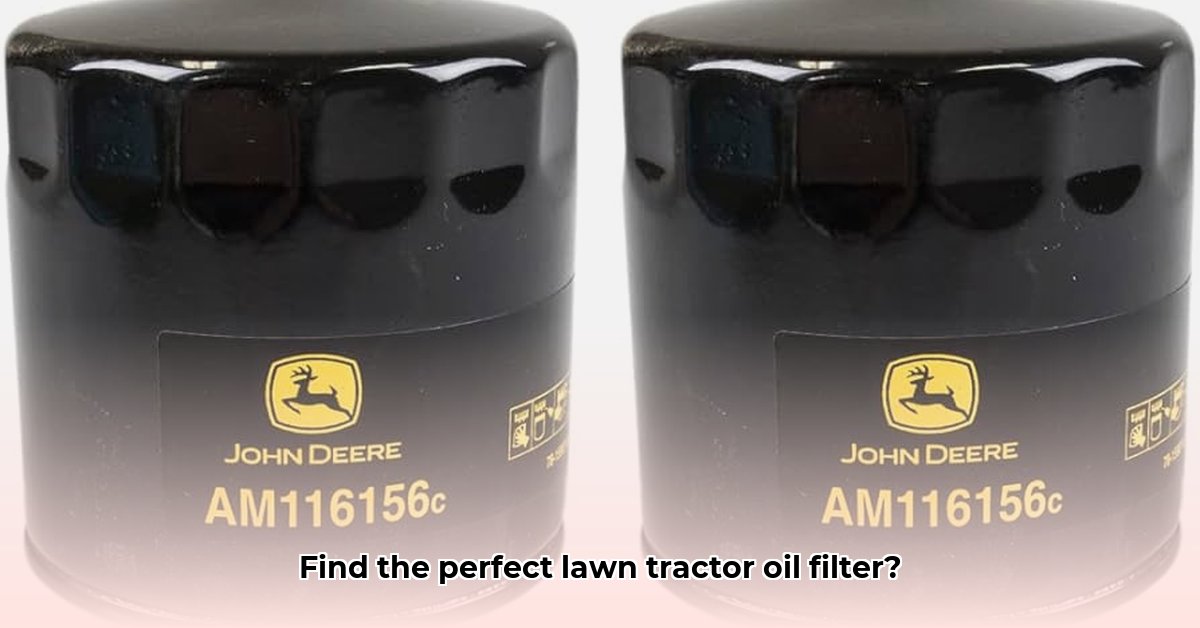
Choosing the right oil filter is crucial for maintaining your lawn tractor's engine health and longevity. Ignoring this seemingly small part can lead to costly repairs and decreased performance. This comprehensive guide will walk you through selecting, installing, and replacing your lawn tractor's oil filter, ensuring your tractor runs smoothly for years to come. For more information on lawn tractors, check out this helpful resource: lawn tractor info.
Understanding Your Tractor's Oil Needs
Before purchasing a new oil filter, consult your owner's manual. It contains vital information regarding the specific type of oil filter required for your engine and the recommended replacement frequency. This is akin to a health check schedule for your machine; following it diligently will prevent potential engine problems. Remember, different tractors have different needs. A small garden tractor's filter requirements differ significantly from those of a larger, heavier-duty model.
Decoding the Filter Mystery: Spin-on vs. Screw-in and Micron Rating
You'll primarily encounter two types of oil filters: spin-on and screw-in. Spin-on filters (twist-and-go) are generally easier to replace. Screw-in filters, requiring a slightly more involved process, are still manageable. Most modern lawn tractors utilize spin-on filters for simplicity. Another crucial factor is the micron rating, indicating the filter's ability to remove fine particles from the engine oil. A lower micron rating signifies better particle removal; however, excessively fine filtration might restrict oil flow. A balance is necessary – most standard filters offer adequate filtration without compromising oil flow.
Choosing the Perfect Filter: A Simple Three-Step Guide
Selecting the right oil filter is straightforward:
Consult Your Manual: The owner's manual provides the most reliable method for identifying the correct part number for your specific lawn tractor model. This is the most reliable source of information.
Online Cross-Referencing: Many online retailers allow you to search for filters by your tractor's make and model, especially helpful if your manual is unavailable. This is a great backup option.
Visit Your Local Dealer: Local dealers possess expertise in specifying parts for your tractor, particularly useful for older models. This is the most reliable option for older or less common models.
Avoid the cheapest filters, as their inferior quality might allow contaminants to enter your engine's oil, leading to costly damage down the line. A slightly higher initial cost translates to better engine protection and longevity.
Changing Your Oil Filter: A Step-by-Step Instructional Guide
Changing your oil filter is a relatively easy process:
Warm-up the Engine: Run the engine for a few minutes to warm the oil, ensuring easier draining. This simple step improves the efficiency of the entire process.
Gather Supplies: You'll need a drain pan for collecting used oil, a new oil filter, the appropriate wrench (often a filter wrench, specified in your manual), and rags or paper towels for cleanup. Proper preparation is key to a smooth and efficient process.
Locate the Filter: The filter is typically situated near the engine. Consult your manual if unsure, as the location varies.
Remove the Old Filter: Carefully loosen the old filter using the wrench; allow the oil to drain completely before removing it entirely.
Prepare the New Filter: Lightly lubricate the rubber gasket of the new filter with fresh oil to ensure a good seal and prevent leaks.
Install the New Filter: Hand-tighten the new filter until snug; avoid overtightening, as this could damage the gasket. Your manual should provide the recommended tightening torque.
Proper Disposal: Dispose of the old filter responsibly at an auto parts store or designated recycling facility.
Leak Check: After installation, meticulously inspect for any oil leaks around the new filter.
The Oil Filter Maintenance Schedule: Preventative Maintenance is Key
Your owner's manual outlines the recommended oil filter replacement schedule, typically based on hours of use or annually. Adhering to this schedule is vitally important for maintaining optimal engine health and preventing costly repairs. This simple preventative maintenance step can save you significant expenses in the long run.
Pros and Cons of Different Oil Filter Types
| Filter Type | Pros | Cons |
|---|---|---|
| Spin-on | Easy installation, widely available | Potentially slightly higher cost for higher quality |
| Screw-in | Often less expensive initially | More difficult to install, might require specialized tools |
| High-Efficiency | Superior filtration, may extend oil change intervals | Higher initial cost, potentially slightly higher restriction of oil flow |
Remember, consistent maintenance, including regular oil and filter changes, is essential for the long-term health and performance of your lawn tractor. Consider it an investment in preserving your equipment and minimizing costly repairs.